Centre-ville de Solo
Surakarta
![At the museum no photos are allowed which is really unfortunate as it was well worth the visit and the guided tour is definitely not to be missed. In the museum there are even Batik made from the Dutch era which depicts stories like Little Red Riding Hood and Snow White!
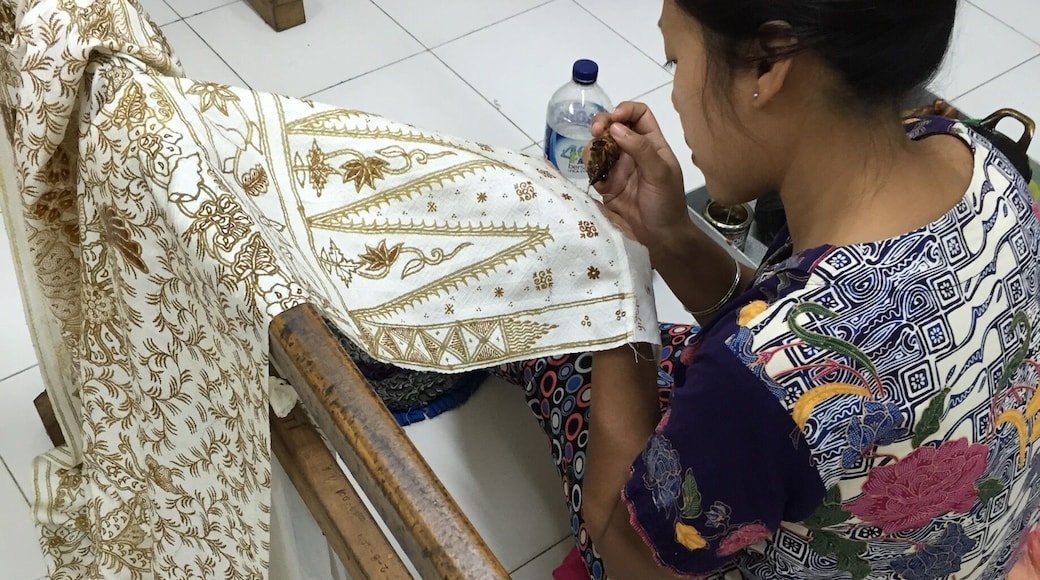
I enjoyed the tour v much and at the end of the tour we were brought to this room where the artisan were working on hand drawn batik.
Below is an excerpt from Wikipedia for anyone interested in learning more about the process of batik making.
Firstly, a cloth is washed, soaked and beaten with a large mallet. Patterns are drawn with pencil and later redrawn using hot wax, usually made from a mixture of paraffin or bees wax, sometimes mixed with plant resins, which functions as a dye-resist. The wax can be applied with a variety of tools. A pen-like instrument called a canting (IPA: [tÊantiĆ], sometimes spelled with old Dutch orthography tjanting) is the most common. A canting is made from a small copper reservoir with a spout on a wooden handle. The reservoir holds the resist which flows through the spout, creating dots and lines as it moves. For larger patterns, a stiff brush may be used. Alternatively, a copper block stamp called a cap (IPA: [tÊap]; old spelling tjap) is used to cover large areas more efficiently.
After the cloth is dry, the resist is removed by scraping or boiling the cloth. The areas treated with resist keep their original color; when the resist is removed the contrast between the dyed and undyed areas forms the pattern. This process is repeated as many times as the number of colors desired.
The most traditional type of batik, called batik tulis (written batik), is drawn using only the canting. The cloth need to be drawn on both sides and dipped in a dye bath three to four times. The whole process may take up to a year; it yields considerably finer patterns than stamped batik.
Source: Wikipedia](https://images.trvl-media.com/place/6224808/26fd1460-c65a-4c1a-9444-7a893e883ac9.jpg?impolicy=fcrop&w=1040&h=580&q=mediumHigh)
![At the museum no photos are allowed which is really unfortunate as it was well worth the visit and the guided tour is definitely not to be missed. In the museum there are even Batik made from the Dutch era which depicts stories like Little Red Riding Hood and Snow White!
I enjoyed the tour v much and at the end of the tour we were brought to this room where the artisan were working on hand drawn batik.
Below is an excerpt from Wikipedia for anyone interested in learning more about the process of batik making.
Firstly, a cloth is washed, soaked and beaten with a large mallet. Patterns are drawn with pencil and later redrawn using hot wax, usually made from a mixture of paraffin or bees wax, sometimes mixed with plant resins, which functions as a dye-resist. The wax can be applied with a variety of tools. A pen-like instrument called a canting (IPA: [tÊantiĆ], sometimes spelled with old Dutch orthography tjanting) is the most common. A canting is made from a small copper reservoir with a spout on a wooden handle. The reservoir holds the resist which flows through the spout, creating dots and lines as it moves. For larger patterns, a stiff brush may be used. Alternatively, a copper block stamp called a cap (IPA: [tÊap]; old spelling tjap) is used to cover large areas more efficiently.
After the cloth is dry, the resist is removed by scraping or boiling the cloth. The areas treated with resist keep their original color; when the resist is removed the contrast between the dyed and undyed areas forms the pattern. This process is repeated as many times as the number of colors desired.
The most traditional type of batik, called batik tulis (written batik), is drawn using only the canting. The cloth need to be drawn on both sides and dipped in a dye bath three to four times. The whole process may take up to a year; it yields considerably finer patterns than stamped batik.
Source: Wikipedia](https://images.trvl-media.com/place/6224808/26fd1460-c65a-4c1a-9444-7a893e883ac9.jpg?impolicy=fcrop&w=1040&h=580&q=mediumHigh)
Découvrez Centre-ville de Solo
Centre-ville de Solo : les meilleurs hĂŽtels

The Royal Surakarta Heritage - Handwritten Collection
Jalan Slamet Riyadi No. 06 Surakarta Central Java
Le prix est de CHF 28 par nuit du 2 mars au 3 mars.
CHFÂ 28
2 mars - 3 mars
taxes et frais compris
Séjournez dans cet hÎtel de luxe à Surakarta. Cet hébergement propose le Wi-Fi gratuit, un parking gratuit et un spa proposant des soins complets. Des attractions ...
8,2/10 Very Good! (168 avis)
The room as no air circulation , seems that nobody stays in for years , it was smelly , very humid in the room , clothes and sheets were weat by humidity , air conditionning very old not working in the first room they give me ! Stains in the bathroom . Really need to renovate ! Also I was able to ...
Avis laissé le 22 sept. 2022

Novotel Solo
Jalan Slamet Riyadi 272 Surakarta Central Java
Le prix est de CHF 27 par nuit du 27 févr. au 28 févr..
CHFÂ 27
27 févr. - 28 févr.
taxes et frais compris
Séjournez dans cet hÎtel avec spa à Surakarta. Cet hébergement propose le Wi-Fi gratuit, un parking gratuit et 2 des piscines extérieures. Des attractions populaires, ...
8,2/10 Very Good! (114 avis)
une hotel basique au lieu d'une 4****
L'état général de l'hotel est un peu démodé. Il n'est plus d'un niveau 4 étoiles. Le pire est le restaurant. C'est une honte ! La prochaine fois j'essayera un autre hotel.
Avis laissé le 23 juin 2016

ibis Styles Solo
Jalan Gajah Mada 23 Surakarta Central Java
Le prix est de CHF 20 par nuit du 11 mars au 12 mars.
CHFÂ 20
11 mars - 12 mars
taxes et frais compris
Séjournez dans cet hÎtel avec spa à Surakarta. Cet hébergement propose le Wi-Fi gratuit, un parking gratuit et 2 des piscines extérieures. Des attractions populaires, ...
8,2/10 Very Good! (103 avis)
bon hĂŽtel
bonne impression
Avis laissé le 28 août 2014

FIM by Zigna
31 Jl. Yosodipuro Surakarta Jawa Tengah
Séjournez dans cet hÎtel avec spa à Surakarta. Cet hébergement propose le Wi-Fi gratuit, un parking gratuit et un spa proposant des soins complets. Des attractions ...
9,4/10 Exceptional! (6 avis)
The hotel is an excellent place to stay. The hotel itself is not special or fancy, but it is well-run, clean, and located in the center of Solo. The breakfast buffet is excellent, the restaurant is good, and the hotel also has a nice cafe with an outside seating area. They featured life music at ...
Avis laissé le 19 juil. 2025

Comfort Centre Residence Solo
Jalan RM. Said Surakarta Jawa Tengah
Le prix est de CHF 15 par nuit du 1 mars au 2 mars.
CHFÂ 15
1 mars - 2 mars
taxes et frais compris
Séjournez dans cet hÎtel à Surakarta. Cet hébergement propose le Wi-Fi gratuit, un parking gratuit et une réception ouverte 24 h/24. Des attractions populaires, ...

Loji Hotel Solo by Wstay
Jl. Hasanudin 134, Surakarta Surakarta Central Java
Le prix est de CHF 13 par nuit du 26 févr. au 27 févr..
CHFÂ 13
26 févr. - 27 févr.
taxes et frais compris
Séjournez dans cet hÎtel avec spa à Surakarta. Cet hébergement propose le Wi-Fi gratuit, un spa proposant des soins complets et le petit déjeuner (en supplément). ...
7,2/10 Good! (17 avis)
The room and bed were big and comfortable, but no fridge and no safebox. Breakfast was really good, though. The hotel is very close to the Balapan train station, which is nice. Itâs a decent budget place, but what makes me unable to recommend is because how dangerous the roads are around the hotel. ...
Avis laissé le 12 sept. 2025
Prix le plus bas trouvĂ© au cours des 24 derniĂšres heures sur la base dâun sĂ©jour dâune nuit pour 2 adultes. Les prix et la disponibilitĂ© sont susceptibles de changer. Dâautres conditions peuvent sâappliquer.
Centre-ville de Solo : vérifiez la disponibilité des hÎtels
Autres quartiers Ă Â Centre-ville de Solo
![At the museum no photos are allowed which is really unfortunate as it was well worth the visit and the guided tour is definitely not to be missed. In the museum there are even Batik made from the Dutch era which depicts stories like Little Red Riding Hood and Snow White!
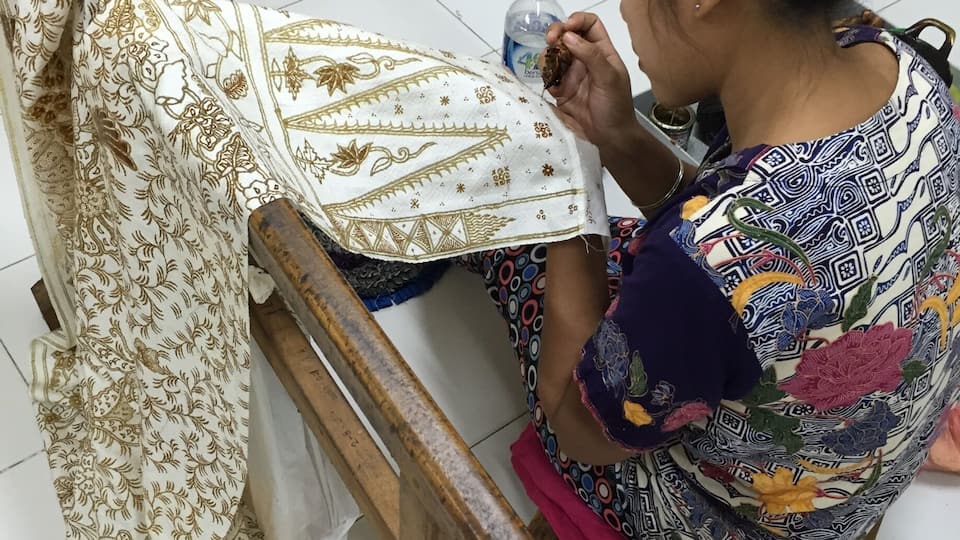
I enjoyed the tour v much and at the end of the tour we were brought to this room where the artisan were working on hand drawn batik.
Below is an excerpt from Wikipedia for anyone interested in learning more about the process of batik making.
Firstly, a cloth is washed, soaked and beaten with a large mallet. Patterns are drawn with pencil and later redrawn using hot wax, usually made from a mixture of paraffin or bees wax, sometimes mixed with plant resins, which functions as a dye-resist. The wax can be applied with a variety of tools. A pen-like instrument called a canting (IPA: [tÊantiĆ], sometimes spelled with old Dutch orthography tjanting) is the most common. A canting is made from a small copper reservoir with a spout on a wooden handle. The reservoir holds the resist which flows through the spout, creating dots and lines as it moves. For larger patterns, a stiff brush may be used. Alternatively, a copper block stamp called a cap (IPA: [tÊap]; old spelling tjap) is used to cover large areas more efficiently.
After the cloth is dry, the resist is removed by scraping or boiling the cloth. The areas treated with resist keep their original color; when the resist is removed the contrast between the dyed and undyed areas forms the pattern. This process is repeated as many times as the number of colors desired.
The most traditional type of batik, called batik tulis](https://images.trvl-media.com/place/6224808/26fd1460-c65a-4c1a-9444-7a893e883ac9.jpg?impolicy=fcrop&w=350&h=192&q=medium)
Banjarsari
Lorsque vous visitez Banjarsari, faites une halte Ă certains endroits, comme Solo Paragon Lifestyle Mall (centre commercial) et Parc citadin Balekambang.