Surakarta

Reiseführer

At the museum no photos are allowed which is really unfortunate as it was well worth the visit and the guided tour is definitely not to be missed. In the museum there are even Batik made from the Dutch era which depicts stories like Little Red Riding Hood and Snow White!

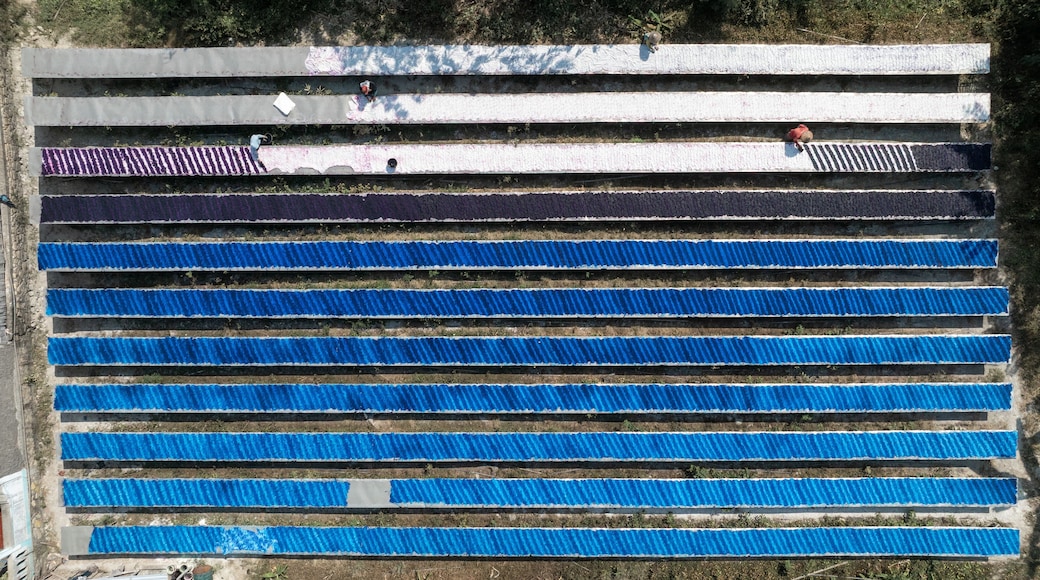
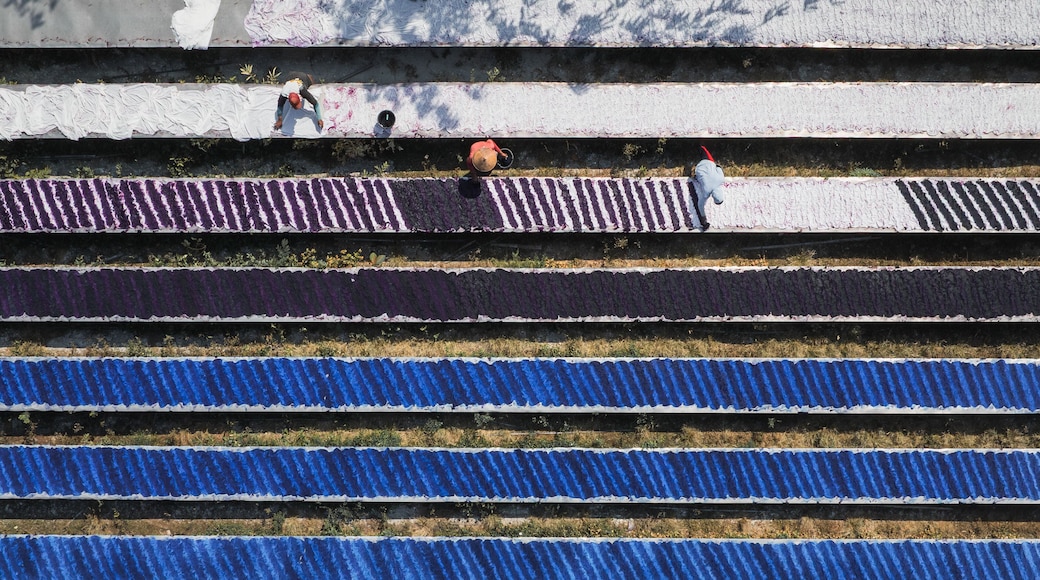
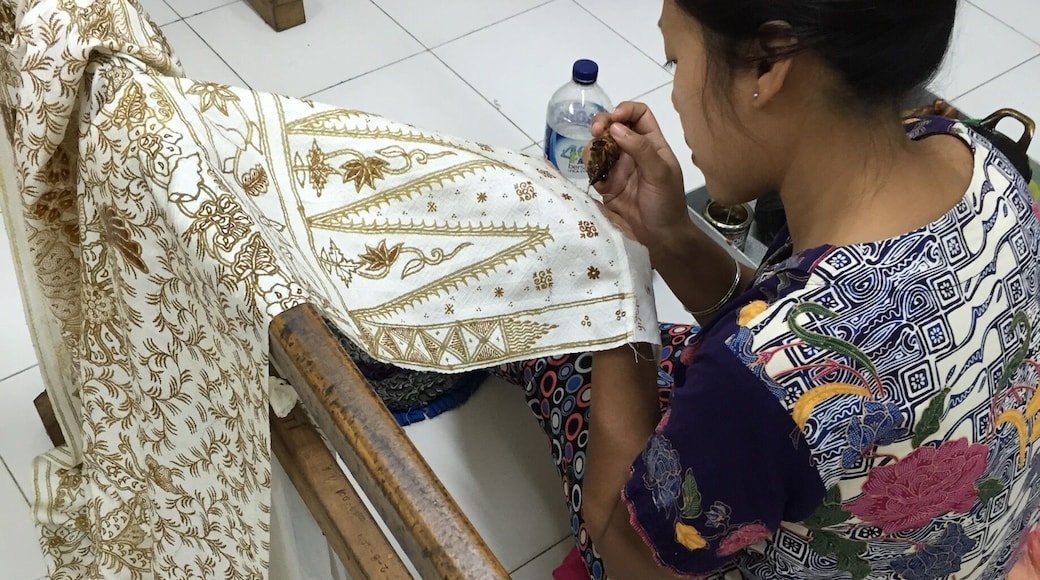
I enjoyed the tour v much and at the end of the tour we were brought to this room where the artisan were working on hand drawn batik.

Below is an excerpt from Wikipedia for anyone interested in learning more about the process of batik making.

Firstly, a cloth is washed, soaked and beaten with a large mallet. Patterns are drawn with pencil and later redrawn using hot wax, usually made from a mixture of paraffin or bees wax, sometimes mixed with plant resins, which functions as a dye-resist. The wax can be applied with a variety of tools. A pen-like instrument called a canting (IPA: [tʃantiŋ], sometimes spelled with old Dutch orthography tjanting) is the most common. A canting is made from a small copper reservoir with a spout on a wooden handle. The reservoir holds the resist which flows through the spout, creating dots and lines as it moves. For larger patterns, a stiff brush may be used. Alternatively, a copper block stamp called a cap (IPA: [tʃap]; old spelling tjap) is used to cover large areas more efficiently.

After the cloth is dry, the resist is removed by scraping or boiling the cloth. The areas treated with resist keep their original color; when the resist is removed the contrast between the dyed and undyed areas forms the pattern. This process is repeated as many times as the number of colors desired.

The most traditional type of batik, called batik tulis (written batik), is drawn using only the canting. The cloth need to be drawn on both sides and dipped in a dye bath three to four times. The whole process may take up to a year; it yields considerably finer patterns than stamped batik.

Source: Wikipedia
At the museum no photos are allowed which is really unfortunate as it was well worth the visit and the guided tour is definitely not to be missed. In the museum there are even Batik made from the Dutch era which depicts stories like Little Red Riding Hood and Snow White!

I enjoyed the tour v much and at the end of the tour we were brought to this room where the artisan were working on hand drawn batik.

Below is an excerpt from Wikipedia for anyone interested in learning more about the process of batik making.

Firstly, a cloth is washed, soaked and beaten with a large mallet. Patterns are drawn with pencil and later redrawn using hot wax, usually made from a mixture of paraffin or bees wax, sometimes mixed with plant resins, which functions as a dye-resist. The wax can be applied with a variety of tools. A pen-like instrument called a canting (IPA: [tʃantiŋ], sometimes spelled with old Dutch orthography tjanting) is the most common. A canting is made from a small copper reservoir with a spout on a wooden handle. The reservoir holds the resist which flows through the spout, creating dots and lines as it moves. For larger patterns, a stiff brush may be used. Alternatively, a copper block stamp called a cap (IPA: [tʃap]; old spelling tjap) is used to cover large areas more efficiently.

After the cloth is dry, the resist is removed by scraping or boiling the cloth. The areas treated with resist keep their original color; when the resist is removed the contrast between the dyed and undyed areas forms the pattern. This process is repeated as many times as the number of colors desired.

The most traditional type of batik, called batik tulis (written batik), is drawn using only the canting. The cloth need to be drawn on both sides and dipped in a dye bath three to four times. The whole process may take up to a year; it yields considerably finer patterns than stamped batik.

Source: Wikipedia
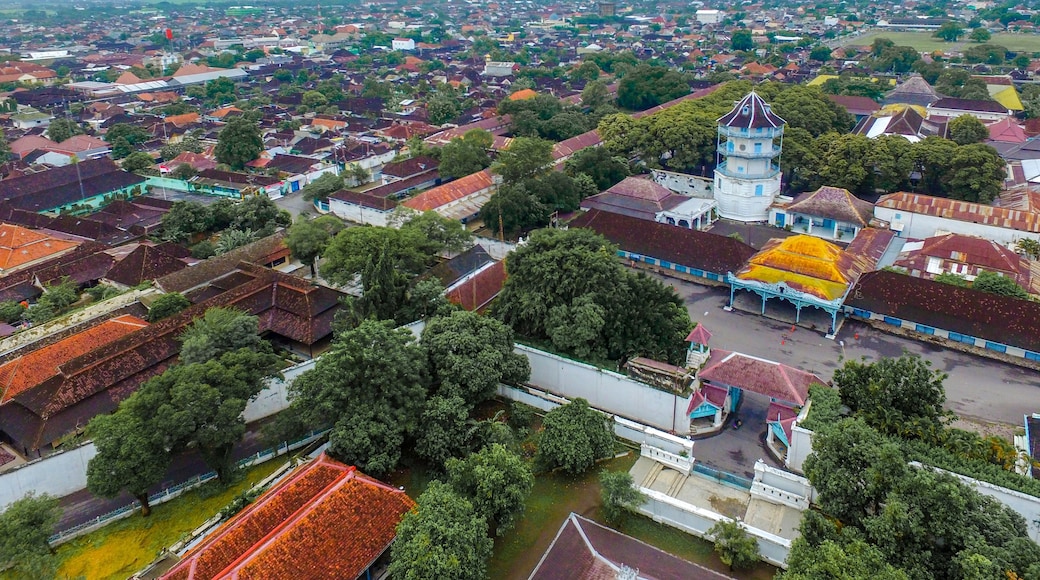
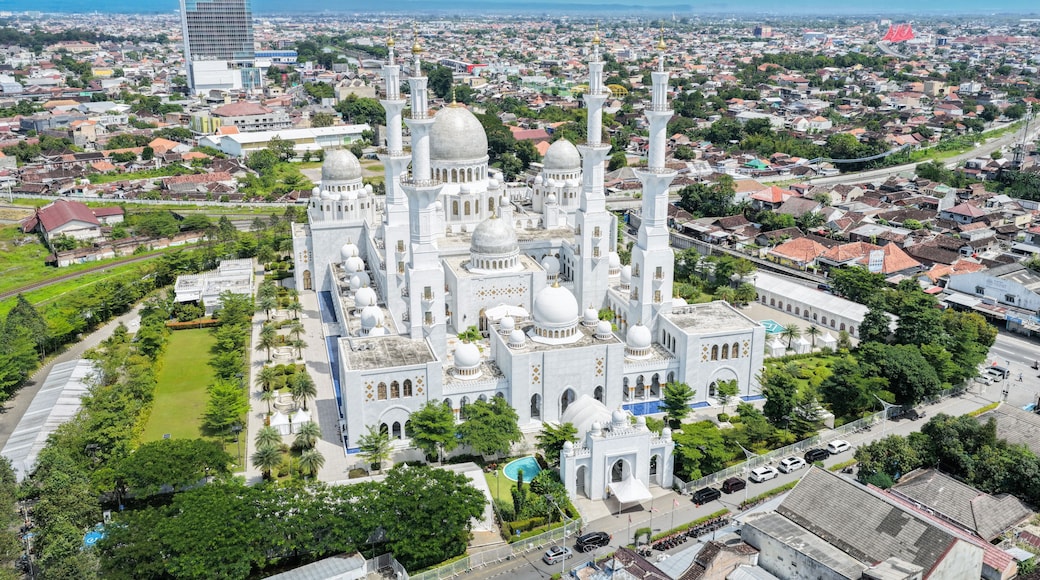
Eine Städtereise nach Solo, der historischen Königsstadt in Zentral-Java im Süden Indonesiens, bietet Einblick in traditionelle, javanische Kultur. Malerisch am längsten Fluss Javas gelegen, gilt Solo als Zentrum der Batikkunst.

Solo, auch Surakarta genannt, bietet Ihnen diverse, historische Bau- und Kunstwerke javanischer Kultur. Gelegen in 90 Meter Höhe und 65 Kilometer von Yogyakarta entfernt, fungiert Solo als Straßen- und Schienenverkehrsknoten Zentral-Javas. Bei einer Städtereise nach Solo können Sie zahlreiche Sehenswürdigkeiten besichtigen. Eines der bekanntesten, historischen Bauwerke Solos ist der 1757 erbaute Mangkunegaran Palace. Diese gut erhaltene Palastanlage, gelegen im Stadtzentrum von Solo, besitzt einen sehenswerten offenen Pavillon und ist bekannt für ihre Tanztradition. Außerdem beherbergt der Mangkunegaran Palast ein Museum mit einer sehenswerten Sammlung traditioneller Masken, Kostümen und Schmuckstücken des traditionellen Puppenspiels Wayang.

Eine weitere Sehenswürdigkeit, welche bei einer Städtereise nach Solo besichtigt werden sollte, ist der Klewer Market, der größte Batikmarkt Indonesiens. Untergebracht in einem dreistöckigen Gebäude, finden Sie hier diverse Textilien aus handgearbeiteter Batik. Solo gilt, neben Yogyakarta, als Zentrum der Batikkunst und bei einem Besuch des Klewer Market können Sie einen Einblick in die Kunst dieses javanischen Handwerks gewinnen. Rund um den Markt gibt es viele, kleine Geschäfte, Moscheen und historische Bauwerke zu bewundern. Die Halbmillionenstadt Solo hat, dank ihrer Universität und diversen Privatschulen, eine lebendige Studentenszene mit zahlreichen Bars und Cafés.

Auch für Geschichtsliebhaber ist eine Reise nach Solo lohnenswert. Die Radya Museum Library ist das älteste Museum Indonesiens. Hier finden Sie zahlreiche Ausstellungsstücke und Kunstwerke javanischer Kulturgeschichte. Im Rahmen einer Städtereise nach Solo lohnt sich ein Besuch einer der bekanntesten, archäologischen Sehenswürdigkeiten Indonesiens, die Sangiran Early Man Site. Die 5600 Hektar umfassende Ausgrabungsstätte, 15 Kilometer östlich von Solo gelegen, ist Fundstätte von Überresten eines 1.5 Millionen Jahre zurückdatierten Homo Erectus und Teil des UNESCO Weltkulturerbes.

Solo bietet, dank seines tropischen Klimas, das ganze Jahr über hervorragende Reisebedingungen. Bei einer Rundreise durch Indonesien, oder im Rahmen eines Kurzurlaubs, lohnt es sich Solo, die historische Kaiserstadt und das lebendige Zentrum javanischer Kultur, zu besuchen. Die Stadt kann auch leicht bei einem Kurztrip vom nahegelegenen Yogyakarta erreicht werden. Solos Flughafen, der Surakarta International Airport, bietet tägliche Flugverbindungen zu zahlreichen indonesischen Städten als auch internationale Flüge nach Malaysia und Singapur mit Anschlussflügen nach Europa.
Discover neighborhoods in Surakarta

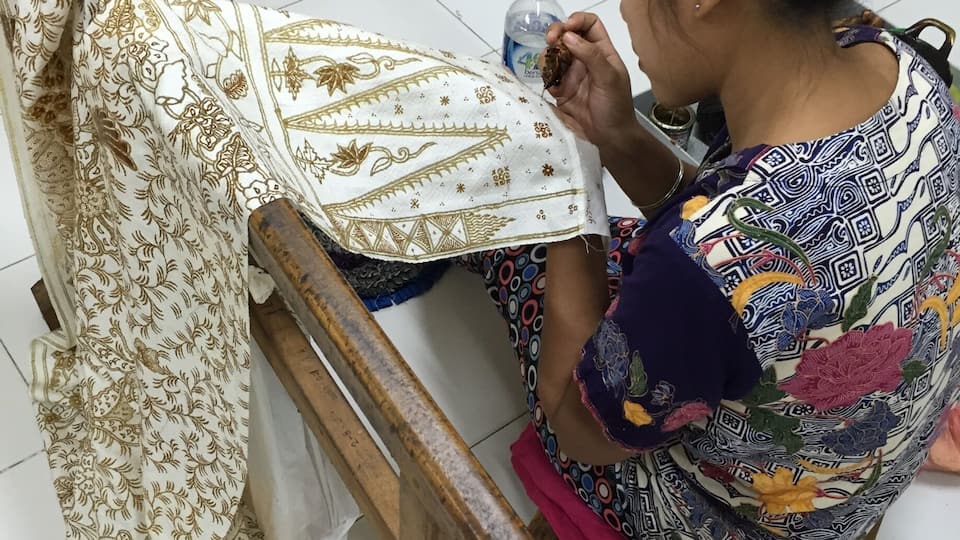
At the museum no photos are allowed which is really unfortunate as it was well worth the visit and the guided tour is definitely not to be missed. In the museum there are even Batik made from the Dutch era which depicts stories like Little Red Riding Hood and Snow White!

I enjoyed the tour v much and at the end of the tour we were brought to this room where the artisan were working on hand drawn batik.

Below is an excerpt from Wikipedia for anyone interested in learning more about the process of batik making.

Firstly, a cloth is washed, soaked and beaten with a large mallet. Patterns are drawn with pencil and later redrawn using hot wax, usually made from a mixture of paraffin or bees wax, sometimes mixed with plant resins, which functions as a dye-resist. The wax can be applied with a variety of tools. A pen-like instrument called a canting (IPA: [tʃantiŋ], sometimes spelled with old Dutch orthography tjanting) is the most common. A canting is made from a small copper reservoir with a spout on a wooden handle. The reservoir holds the resist which flows through the spout, creating dots and lines as it moves. For larger patterns, a stiff brush may be used. Alternatively, a copper block stamp called a cap (IPA: [tʃap]; old spelling tjap) is used to cover large areas more efficiently.

After the cloth is dry, the resist is removed by scraping or boiling the cloth. The areas treated with resist keep their original color; when the resist is removed the contrast between the dyed and undyed areas forms the pattern. This process is repeated as many times as the number of colors desired.

The most traditional type of batik, called batik tulis

Innenstadt von Solo

Genieße Innenstadt von Solo sowie seine Museen und seinen Zoo. Nimm dir auch Zeit, Sehenswürdigkeiten wie Solo Paragon Lifestyle Mall oder Nakamura Klinik einen Besuch abzustatten.

Innenstadt von Solo
At the museum no photos are allowed which is really unfortunate as it was well worth the visit and the guided tour is definitely not to be missed. In the museum there are even Batik made from the Dutch era which depicts stories like Little Red Riding Hood and Snow White!

I enjoyed the tour v much and at the end of the tour we were brought to this room where the artisan were working on hand drawn batik.

Below is an excerpt from Wikipedia for anyone interested in learning more about the process of batik making.

Firstly, a cloth is washed, soaked and beaten with a large mallet. Patterns are drawn with pencil and later redrawn using hot wax, usually made from a mixture of paraffin or bees wax, sometimes mixed with plant resins, which functions as a dye-resist. The wax can be applied with a variety of tools. A pen-like instrument called a canting (IPA: [tʃantiŋ], sometimes spelled with old Dutch orthography tjanting) is the most common. A canting is made from a small copper reservoir with a spout on a wooden handle. The reservoir holds the resist which flows through the spout, creating dots and lines as it moves. For larger patterns, a stiff brush may be used. Alternatively, a copper block stamp called a cap (IPA: [tʃap]; old spelling tjap) is used to cover large areas more efficiently.

After the cloth is dry, the resist is removed by scraping or boiling the cloth. The areas treated with resist keep their original color; when the resist is removed the contrast between the dyed and undyed areas forms the pattern. This process is repeated as many times as the number of colors desired.

The most traditional type of batik, called batik tulis

Banjarsari

Während deines Besuchs in Banjarsari solltest du Sehenswürdigkeiten wie Solo Paragon Lifestyle Mall und Balekambang-Park einen Besuch abstatten.

Banjarsari
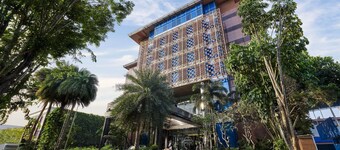
Alila Solo, Java

Alila Solo, Java

5 out of 5
Jl. Slamet Riyadi No. 562 Surakarta Central Java
Der Preis beträgt CHF 53 pro Nacht vom 26. Jan. bis zum 27. Jan.
CHF 53
26. Jan.–27. Jan.
inkl. Steuern & Gebühren
Dieses Hotel im luxuriösen Stil bietet dir einen angenehmen Aufenthalt in Surakarta. Freu dich auf WLAN-Internetzugang (kostenlos), Parken ohne Service (kostenlos) ...
9.2/10 Wonderful! (136 Bewertungen)
By far the most beautiful hotel I've ever stayed in. Everything is thoughtfully arranged, spotlessly clean and athletically pleasing. The service is also excellent in every way.

Bewertet am 27. Dez. 2025

Alila Solo, Java
The Royal Surakarta Heritage - Handwritten Collection

The Royal Surakarta Heritage - Handwritten Collection

5 out of 5
Jalan Slamet Riyadi No. 06 Surakarta Central Java
Der Preis beträgt CHF 27 pro Nacht vom 19. Jan. bis zum 20. Jan.
CHF 27
19. Jan.–20. Jan.
inkl. Steuern & Gebühren
Dieses Hotel im luxuriösen Stil bietet dir einen angenehmen Aufenthalt in Surakarta. Freu dich auf WLAN-Internetzugang (kostenlos), Parken ohne Service (kostenlos) ...
8.2/10 Very Good! (166 Bewertungen)
Lobby ist sehr schön. Fitnessraum vorhanden, aber eher heruntergekommen. Für die meisten Übungen jedoch in Ordnung. Frühstücksangebot ist gut. Pool mit schöner Aussicht. Jedoch war unser Zimmer ziemlich abgewohnt und auch nicht sauber. Daher die 2 abgezogenen Punkte.

Bewertet am 9. Juli 2024

The Royal Surakarta Heritage - Handwritten Collection
Moxy Solo

Moxy Solo

3.5 out of 5
Jl. Slamet Riyadi No.173, Kemlayan Surakarta Central Java
Der Preis beträgt CHF 34 pro Nacht vom 15. Jan. bis zum 16. Jan.
CHF 34
15. Jan.–16. Jan.
inkl. Steuern & Gebühren
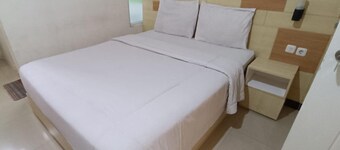
Dieses Hotel bietet dir einen angenehmen Aufenthalt in Surakarta. Freu dich auf WLAN-Internetzugang (kostenlos), Parken ohne Service (kostenlos) und Frühstück ...
9.2/10 Wonderful! (7 Bewertungen)
It was a chic and clean hotel in the center of the city. The staff was very friendly.

Bewertet am 28. Dez. 2024

Moxy Solo
Dies ist der niedrigste Preis pro Nacht für 1 Übernachtung von 2 Erwachsenen, der in den letzten 24 Stunden gefunden wurde. Preise und Verfügbarkeiten können sich ändern. Es können zusätzliche Bedingungen gelten.
ZG Homestay Solo

ZG Homestay Solo

3 out of 5
1 Jl. Pajajaran Surakarta Jawa Tengah
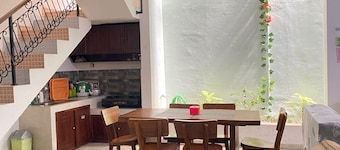
Diese Villa bietet dir einen angenehmen Aufenthalt in Surakarta. Freu dich auf täglich, Garten und Fahrradverleih. Einige beliebte Sehenswürdigkeiten – Balekambang-Park ...
ZG Homestay Solo
ZG Home Solo

ZG Home Solo

2 out of 5
No.8-4 Jl. Pajajaran I Surakarta Jawa Tengah
Diese Villa bietet dir einen angenehmen Aufenthalt in Surakarta. Freu dich auf WLAN-Internetzugang (kostenlos). Einige beliebte Sehenswürdigkeiten – Balekambang-Park ...
ZG Home Solo
Diiza Glamping Tawangmangu

Diiza Glamping Tawangmangu

3 out of 5
Area Hutan, Kalisoro Tawangmangu Jawa Tengah
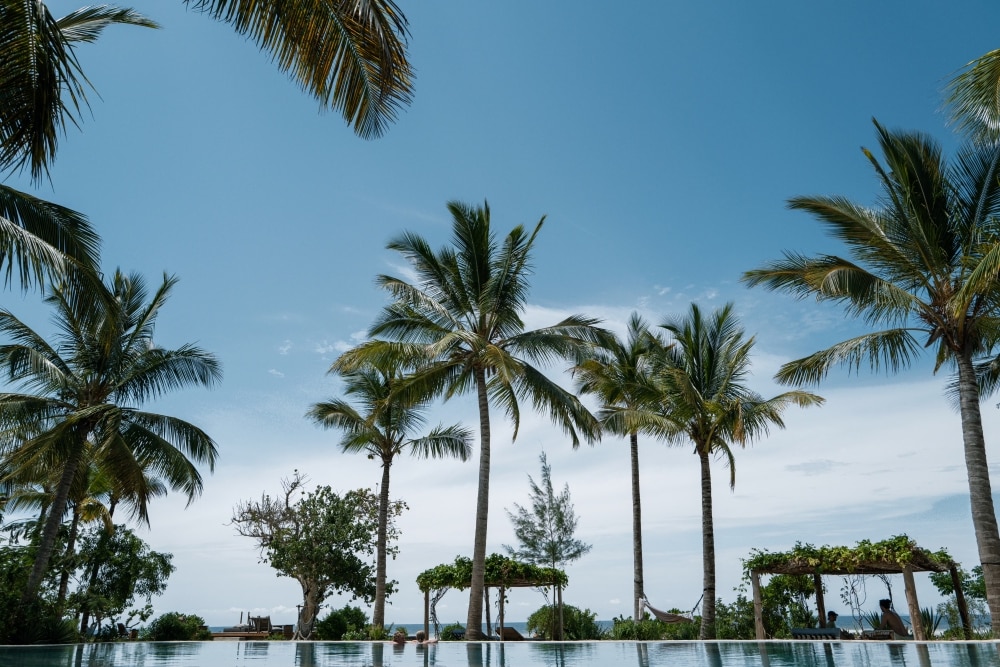
Diese Villa bietet dir einen angenehmen Aufenthalt in Tawangmangu. Freu dich auf WLAN-Internetzugang (kostenlos), Parken ohne Service (kostenlos) und Privatpools. ...
Diiza Glamping Tawangmangu
Dies ist der niedrigste Preis pro Nacht für 1 Übernachtung von 2 Erwachsenen, der in den letzten 24 Stunden gefunden wurde. Preise und Verfügbarkeiten können sich ändern. Es können zusätzliche Bedingungen gelten.

Beliebte Attraktionen